

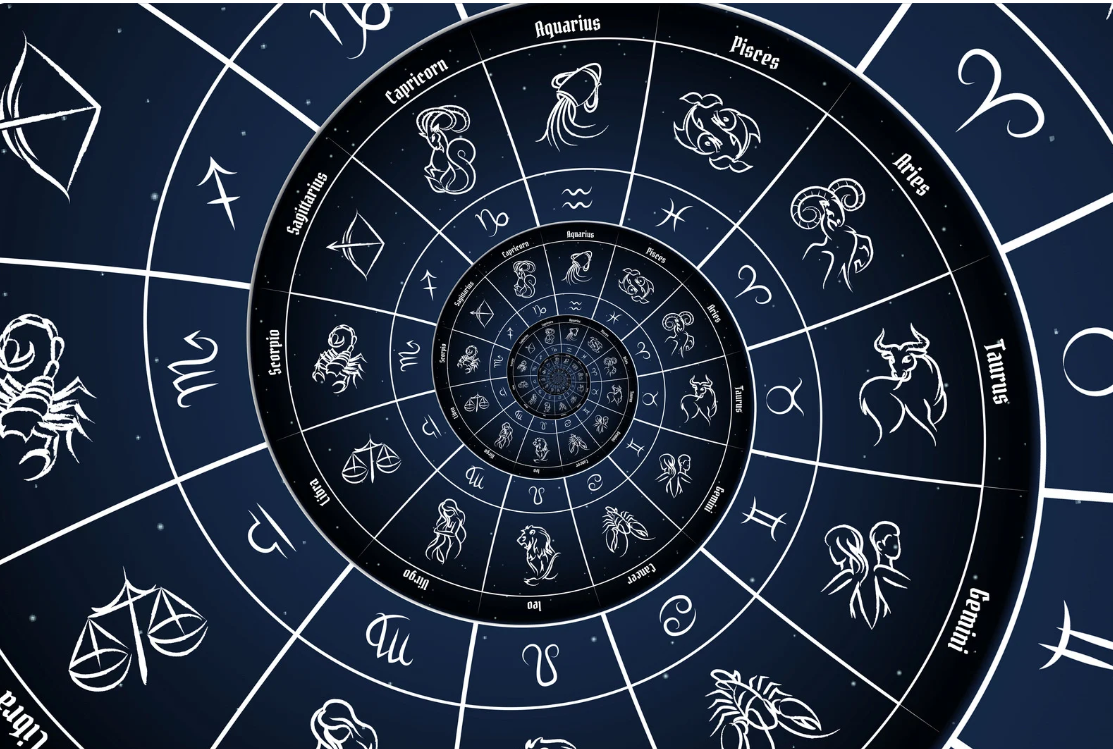
A rising sign is chart vocabulary, not a verdict about your personality or appearance. This guide focuses on the birth data, settings and uncertainty needed to discuss an ascendant responsibly, rather than assuming a description reveals who you are.
Quick Guide
- Distinguish the rising sign from the Sun’s sign.
- Check the birth date, local time and place.
- State the chart settings and any uncertainty.
- Do not use personality or appearance to invent a birth time.
Birth data, stated settings, honest uncertainty
Birth data
A date alone does not confirm which sign was at the eastern horizon.
Stated settings
Record the source and calculation choices before comparing results.
Honest uncertainty
An unknown time is a limit to acknowledge, not a flaw to hide.
Rising sign versus Sun sign
The Sun sign describes the zodiac sign occupied by the Sun in the chosen framework. The rising sign, also called the ascendant sign, is the sign at the eastern horizon for the birth time and place. One is not automatically a substitute for the other.
CHANI’s birth-time guide explains this horizon-based definition and the importance of time and location. Its symbolic interpretations are not evidence that an ascendant determines the body, vitality or character.
The horizon is a reference, not a zodiac personality
Altitude and zodiac position answer different questions
“Rising” refers to a horizon-based chart feature, not a second Sun or a body part. More precisely, the Ascendant names a chart point; the rising sign names the zodiac sign containing that point. A number beside a sign is not automatically an angle above the ground.
The U.S. Naval Observatory’s horizon-coordinate explanation defines altitude as angular distance above or below an observer’s horizon. It describes using the observer’s position and the time when calculating horizon coordinates. That astronomical reference explains why a horizon needs a place and time; it does not authenticate an astrological interpretation.
Above the horizon: +20 degrees
The plus sign means twenty degrees above the ideal horizon reference.
On the horizon: 0 degrees
Zero altitude marks the ideal horizon reference itself. This number alone gives no zodiac sign.
Below the horizon: −10 degrees
The minus sign means ten degrees below that reference.
These are three hypothetical altitude readings to explain the coordinate, not positions calculated for a birth. Degrees here measure an angle, not hours, minutes of clock time or temperature. The bands are a reading key, not a scale drawing or a calculator.
Keep the reference with the number: “20 degrees altitude” describes an angle relative to a horizon. “20 degrees Virgo” describes a position within the named zodiac sign in the chart’s chosen system. The shared number does not make them the same coordinate. A zero-altitude label, by itself, cannot tell you an Ascendant sign or recover a birth time.
Next step: when a chart displays a degree, read the legend and name what it measures before interpreting it. Keep the original birth inputs and stated settings with any Ascendant output. If they are missing, leave the entry uncertain instead of substituting a Sun sign, an outdoor observation or a personality match.
What to record before a calculation
- The calendar date of birth.
- The local birth time and whether it is documented, recalled or approximate.
- The birthplace used by the calculator.
- The calculator’s treatment of time zone and daylight saving.
- The stated zodiac and house settings.
Keep a note of uncertainty alongside a result. This guide to introductory chart vocabulary distinguishes placements, settings and optional questions. Do not share identity documents or unrelated private details merely to discuss a chart.
When birth time is unknown
You may choose to check a record or ask someone who was present, recognizing that records differ and recollections can be approximate. A remembered time is not automatically an exact one.
The cited CHANI guide distinguishes work with planet placements from time-dependent rising, house and angle information. A placeholder time does not become your recovered birth time. This article does not confirm an ascendant from a noon chart, a sunrise assumption or a personality match.
Rectification is an interpretive estimate, not documentary recovery. If the input is uncertain, keep the result uncertain instead of turning it into a definitive identity label.
Settings and drawing conventions
State the chart method before comparing two outputs. A decorative wheel is not the same as a personal calculation, and a point drawn at “nine o’clock” is not a universal rule for every chart format or house system.
This guide supplies no universal sign-change interval and no claim that being born before or after sunset confirms an opposite rising sign. Use the actual input and method rather than a shortcut.
Self-presentation is not anatomy or character proof
Astrological discussion may use a rising sign as a self-presentation theme. It cannot establish that someone is blunt, unaccountable, vulnerable, snobbish, disciplined or naturally a leader. Nor does it establish how every observer sees them.
This discussion of self-presentation without attractiveness rankings keeps symbolism separate from body verdicts. No rising sign requires changing your appearance, disclosing a secret or excusing harmful conduct.
Twelve optional reflection questions
These newly invented editorial questions are not traditional traits, a test or a way to recover birth time. The twelve sign names are optional organizing labels; anyone can use any question or skip the framework.
Aries — optional question
How do I choose to introduce myself?
Taurus — optional question
What makes an unfamiliar setting more comfortable?
Gemini — optional question
What question helps me understand someone?
Cancer — optional question
What private information do I choose not to share?
Leo — optional question
When do I want attention, and when not?
Virgo — optional question
Which detail matters for this actual situation?
Libra — optional question
Can I disagree without pretending to agree?
Scorpio — optional question
Am I assuming others know what I mean?
Sagittarius — optional question
What new experience do I want to try voluntarily?
Capricorn — optional question
What preparation is useful rather than compulsory?
Aquarius — optional question
How can I include someone without pressure?
Pisces — optional question
What real example contradicts my initial impression?
A grounded home chart note
At an ordinary home desk, record the data source, settings and what remains unknown. If you choose one reflection question, add a specific example and a counterexample. An interpretation can be rejected without meaning you misunderstood your “real” self.
This article does not provide a history of the zodiac or claim planets orbit Earth. It does not turn an invented origin story into support for personality predictions. The useful task here is clear vocabulary and honest limits.
Key Takeaways
- The Sun’s sign and the horizon-based rising sign are different chart features.
- Birth data and settings matter to a calculated result.
- Unknown time limits what you can claim.
- Interpretations do not prove body traits, character or a fixed future.
Frequently asked questions
1. What is a rising sign?
The rising sign, or ascendant sign, is the zodiac sign at the eastern horizon for the calculated birth time and place. It is distinct from the sign occupied by the Sun.
2. What information do I need to calculate it?
Use the birth date, local birth time and birthplace, with the correct time-zone treatment and stated chart settings. A date alone does not confirm a rising sign.
3. Can I recover my rising sign from my personality when birth time is unknown?
A personality description is not recovered birth-time evidence. Keep the rising sign and time-dependent chart features uncertain rather than choosing the description that feels most flattering.
4. Does a rising sign prove appearance or personality?
No. Astrological self-presentation themes are optional interpretations, not measurements of anatomy, character, ability or how everyone perceives you.