

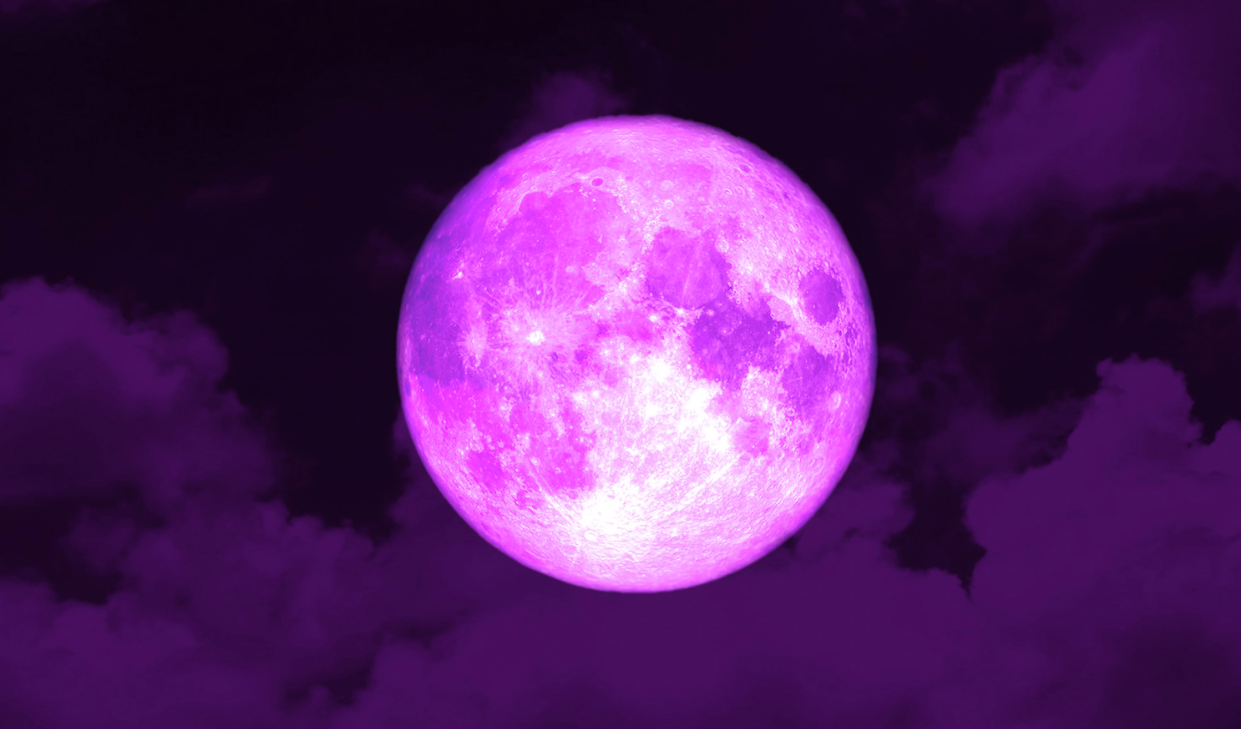
The Strawberry Moon is a seasonal name associated with June’s full Moon and ripening berries. It does not mean the Moon must turn strawberry red, and it does not establish special power for predicting your future.
The cover is purple-tinted Moon artwork, not a record of the natural color of every June full Moon. Keep an astronomical description separate from any optional spiritual interpretation.
Quick Guide
- The name describes a seasonal association, not a required color.
- A June full Moon is not automatically a supermoon.
- Moonlight is reflected sunlight, not proof of stronger tarot predictions.
- A home reflection session needs no candle, bonfire or view of the Moon.
Seasonal name, reflected sunlight, optional reflection
Seasonal name
A berry-season association is not a color forecast or a universal cultural tradition.
Reflected sunlight
The visible illuminated portion changes with orbital geometry. It does not reveal a relationship’s future.
Optional reflection
Use a card as a question prompt if wanted. Decisions remain grounded in actual circumstances.
What the name does—and does not—mean
NASA’s Strawberry Moon explanation connects the name with berries ripening and notes that it does not necessarily imply a red Moon. Different cultures have different lunar names; this article does not attribute one identical tradition to everyone.
NASA’s linked article discusses a particular full Moon in 2021. Its description of that year’s supermoon is not a claim about every June. A seasonal name alone tells you neither an exact local viewing time nor the Moon’s distance from Earth.
Why a full Moon looks illuminated
NASA’s lunar-phase guide explains that moonlight is reflected sunlight. Half the Moon is illuminated, while the portion visible from Earth changes as it orbits. The phase cycle takes approximately 29.5 days.
At full Moon, the illuminated side faces Earth. This is not caused by a June Sun being “full of energy,” and a bright-looking Moon does not demonstrate stronger divination. This guide to crescent phases and optional symbolism also separates observation from interpretation.
A modest home session, without ritual duties
If you want to reflect, sit at an ordinary home desk with a notebook and cards. Daylight or an electric lamp is enough. There is no requirement to see the Moon, use flames, stay up late or pay for a reading. Skip the activity if it is not useful to you.
A preferred time can be a personal ritual choice, not a scientifically established window of predictive power. This guide to tarot frameworks and reality checks treats symbolic correspondences as optional rather than evidence.
An optional five-question spread
These are newly invented editorial prompts, not an ancient ceremony, an authenticated cultural tradition or a forecast. Lay out five cards in any comfortable arrangement; the positions do not mean five lunar phases are happening at once.
- What am I considering starting?
- What small action is within my control?
- What do I actually know about the situation?
- What assumption needs checking?
- What voluntary next step—or pause—fits my circumstances?
Write one interpretation and one example that contradicts it. You may use a single question without cards instead. No response has to bring peace, happiness or a prescribed feeling.
Cards are not relationship evidence
A Tower or Five of Swords card does not establish an impending breakup, betrayal, self-sabotage or unworthiness. A card cannot prove someone’s hidden feelings, guarantee healing or tell you that you must stay, reconcile or leave.
Consider actual conduct and freely chosen boundaries. No one owes affection, confrontation or forgiveness because of a reading. Where fear, threats or control are present, prioritize appropriate support and safety rather than a ritual verdict. Tarot is not a substitute for qualified medical, mental-health, legal or financial guidance.
Key Takeaways
- Distinguish the seasonal name from color and distance claims.
- Separate reflected sunlight from spiritual meaning.
- Make any reflection optional and free of prediction or ritual pressure.
- Your circumstances and choices matter more than a card-based verdict.
Frequently asked questions
Why is June’s full Moon called the Strawberry Moon?
The seasonal name refers to ripening berries, not a requirement that the Moon look red or pink. Different cultures use different names; the purple cover is stylized artwork.
Is every Strawberry Moon a supermoon?
No. The June seasonal name does not establish how close the Moon is to Earth. Do not generalize a particular year’s supermoon description to every June.
Does a full Moon make tarot more predictive?
This guide does not establish increased predictive power at any lunar phase. Moonlight is reflected sunlight, and a tarot interpretation is not evidence of future events or another person’s feelings.
Can the optional spread decide whether to stay in a relationship?
No. The invented questions are reflection prompts, not proof of betrayal, healing or a destined reunion. Use actual conduct, voluntary boundaries and appropriate support; no card obligates someone to stay or confront another person.