

The original “2nd and 3rd” wording discusses Uranian and Hellenistic approaches, not a universal ranking of charts. This guide compares documented display factors and settings without claiming that one identifies the best career, partner or event date.
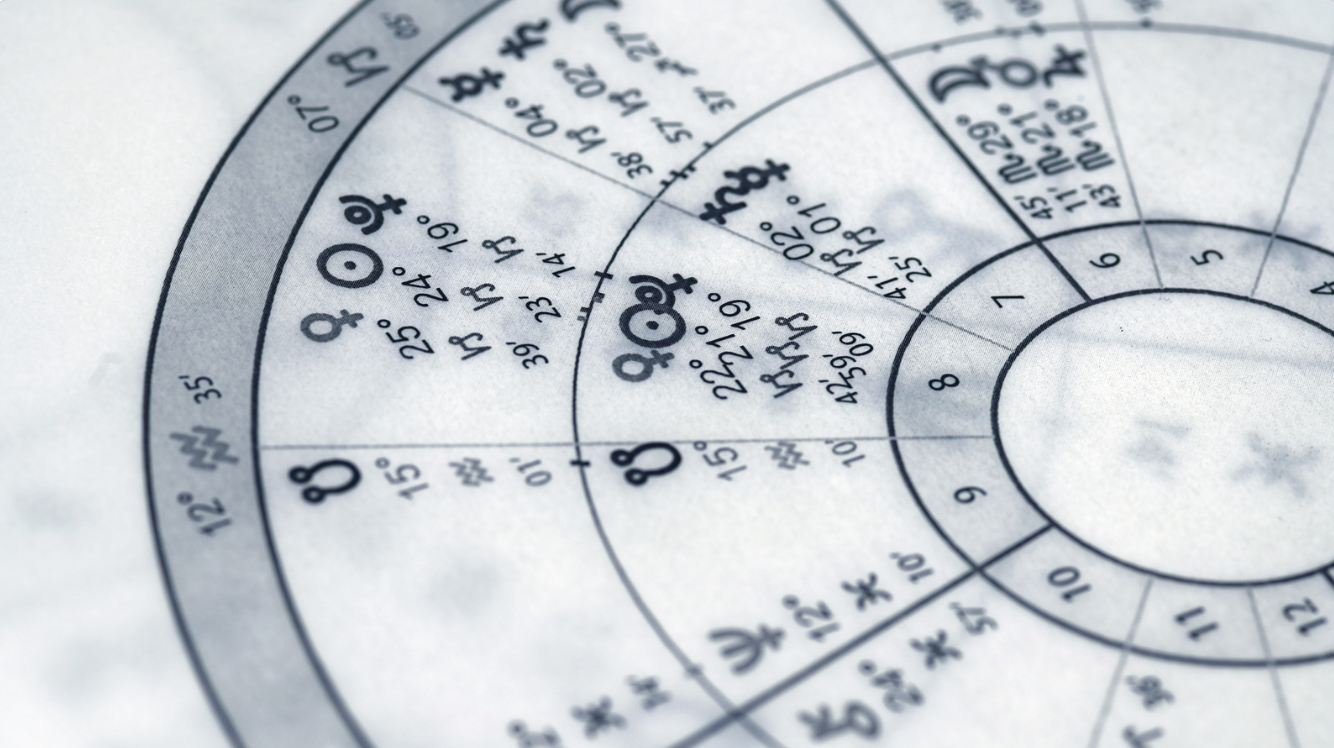
The cover is a close-up of a printed chart with symbols and numerical entries. It is illustrative, not a complete readable reference chart or proof of a forecast.
Quick Guide
- Record the named method and software preset.
- Distinguish observed objects from hypothetical or calculated factors.
- Copy the display settings before comparing entries.
- More symbols do not establish a more accurate interpretation.
- No formula chooses a marriage date or establishes fertility.
Factors, settings and claims
Selected factors
What is the chart actually displaying?
Documented settings
Which preset and conventions produced this presentation?
Separate claim
What interpretation was added, and what does it not prove?
Uranian factors are not discoveries beyond Pluto
Astrodienst’s hypothetical-factor list groups eight names under Uranian planets of the Hamburg School: Cupido, Hades, Zeus, Kronos, Apollon, Admetos, Vulkanus and Poseidon. It explicitly states that these planets do not exist. Their inclusion as software factors does not make them confirmed physical discoveries.
This corrects the original description of them as planets found past Pluto. The guide does not teach or authenticate a midpoint formula, dial procedure or prediction system. If an entry is unfamiliar, consult its documentation rather than assuming it refers to an observed object.
A Hellenistic preset is a documented example, not every chart
Astrodienst’s Hellenistic drawing-style documentation describes its defaults: Whole Sign Houses, seven classical planets, a lunar node and selected lots. It also describes colours for day and night sect categories and its selected aspects and line conventions.
Those are this provider’s documented display choices, not universal settings for every Hellenistic chart or proof that a category determines someone’s life. Do not interpret a red or blue glyph without reading that chart’s own legend.
The traditional and modern method-settings guide offers related questions without treating a method’s name as a personality verdict. This page does not retain the original unsupported “2 BCE” date or a most-detailed-Western-chart ranking.
Compare the display before comparing a report
Copy the input date and the selected objects or factors. Then record the house system, included points and aspect conventions. A changed display or house assignment is not evidence that a physical object moved because someone selected another preset.
Keep the chart entry in one note and the attached interpretation in another. The chart-entry and report worksheet gives a practical reading sequence without blending a label into a future-event claim.
Six newly invented optional comparison questions
These editorial inventions are not traditional techniques or a validated test. At an ordinary home desk, choose a useful question, leave an uncertainty visible or skip the exercise.
- What named method and preset did I record?
- Which factors are observed objects, hypothetical factors or calculated points?
- What documentation explains an unfamiliar label?
- Which settings differ between the displays?
- What interpretation did the report add?
- What can I leave unresolved without making a decision?
No fertility, partner or event-date guarantee
This page does not establish that a formula selects when to marry, that a chart can judge whether a current relationship is good for someone or that additional factors reveal fertility. Neither an annual prediction nor an unfamiliar technique name proves an event.
Use relevant evidence, direct agreement and appropriately qualified assistance for consequential choices. A chart does not establish consent or require dating, marriage, disclosure or a purchase.
In a newly invented fictional example, someone compares two software displays, notes different included factors and asks which settings were used. They may understand the presentation better while leaving the interpretation unanswered. That is a documentation check, not a demonstrated forecast.
Frequently asked questions
Are the original second and third charts universal rankings?
No ranking is established here. The original page discusses named approaches; this guide compares documented settings rather than declaring a most detailed or best chart.
Are Uranian hypothetical factors confirmed physical planets beyond Pluto?
Astrodienst lists eight Uranian Hamburg School factors as hypothetical and explicitly states that they do not exist. They should not be presented here as observed planets beyond Pluto.
Does a Hellenistic drawing style change where physical objects are?
A drawing preset changes what is displayed and how entries are presented. Its symbolic interpretation is separate from a physical object’s position.
Can either approach establish fertility or the right marriage date?
This page establishes no such result. A display, formula or interpretive label does not determine fertility, consent, relationship safety or a required marriage date.