

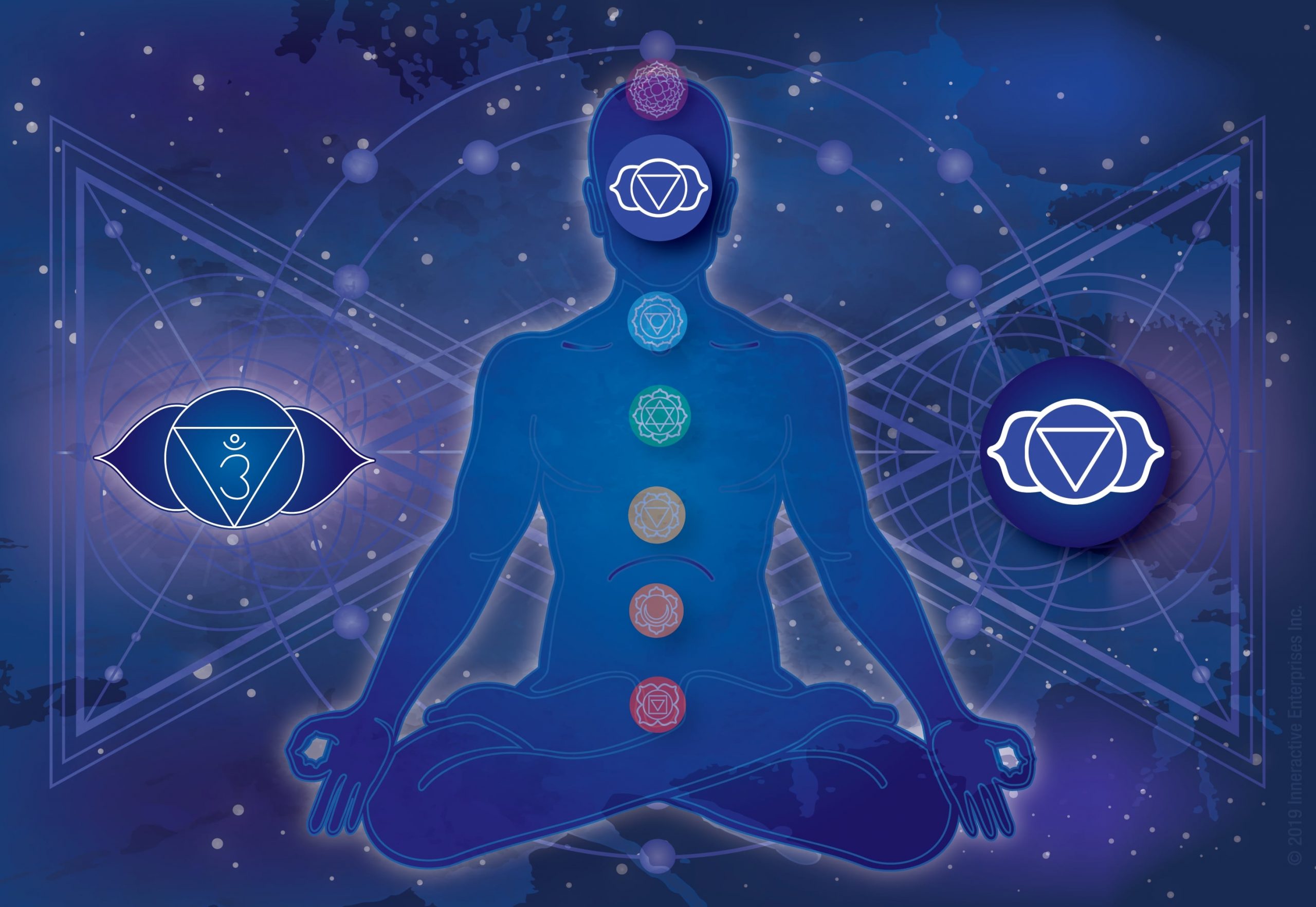
Cover: a stylized meditating figure with an indigo forehead emblem, seven chakra symbols and cosmic geometry. It illustrates a spiritual framework, not anatomy, diagnosis or proof of an energy condition.
“Overactive third eye” is spiritual language used in some chakra traditions. It is not a recognized medical diagnosis, and a chakra is not established here as a literal structure in the forehead or hypothalamus. If the phrase helps you reflect, keep the symbol separate from symptoms that may need qualified care.
Quick Guide
- Name the actual experience before assigning a spiritual cause.
- Do not diagnose headaches, vision changes, insomnia, nausea, anxiety or hallucinations as chakra imbalance.
- Use ordinary grounding only as an optional comfort practice, not treatment.
- Seek prompt or urgent help for concerning symptoms rather than waiting for energy work.
- Decline pressure to buy healing, crystals or repeated sessions.
Keep three different lanes separate
Spiritual symbol
The third eye may represent insight, imagination or inner attention within a chosen tradition.
Reported experience
Describe what occurred: a headache, visual effect, vivid image, poor sleep, worry or difficulty concentrating.
Care decision
Choose support according to severity, onset, risk and qualified guidance, not a chakra label.
Third-eye symbolism is not an anatomical explanation
People may place the symbolic third eye between the brows and associate indigo with it. That location and color are parts of a spiritual or artistic system. This page does not claim that the hypothalamus is a spiritual center, that energy physically collects there or that balancing colors changes brain function.
A personally meaningful meditation can remain optional. It cannot determine why someone has pain, disturbed sleep, nausea, blurred vision, unusual perceptions or trouble distinguishing an experience from external events.
Symptoms deserve their own assessment
| Experience | Unsupported shortcut | Safer next distinction |
|---|---|---|
| Headache or nausea | “My third eye is overactive.” | Record onset, severity and accompanying symptoms; use appropriate medical guidance. |
| Blurred vision, flashes or other visual change | “I am receiving a vision.” | Treat a new or sudden visual symptom as a health question, not spiritual confirmation. |
| Seeing or hearing something others do not | “A guide is sending messages.” | Seek medical help and describe the experience without requiring a supernatural explanation. |
| Poor sleep, anxiety or concentration difficulty | “Energy is stuck in my forehead.” | Note duration and effect on daily functioning and contact appropriate support. |
The NHS guidance on hallucinations advises getting medical help for hallucinations and lists emergency situations such as rapidly worsening hallucinations, sudden confusion or risk of harm. Its retinal migraine guidance also says new visual symptoms need medical attention and lists sudden severe headache or sudden vision loss, blurred vision or double vision among emergency signs. Use the urgent-care and emergency services for your location.
A five-step grounding note
This is a way to organize information while arranging appropriate care. It is not a treatment for hallucinations, neurological symptoms, eye problems, anxiety or insomnia.
Pause
Move to an ordinary, safer setting if you can do so without delaying urgent help.
Describe
Write what you noticed, when it began and whether it is new or worsening.
Separate
Keep the sensation or event distinct from a spiritual interpretation.
Contact
Use qualified medical, eye-care or mental-health support appropriate to the symptom.
Review
Follow professional advice and update the record if the experience changes.
Low-risk comfort options are not cures
The grounded mind, body and spirit check-in offers a broader needs-and-limits framework while keeping spiritual language separate from health guidance.
Spiritual practice remains optional
Prayer, meditation, drawing, quiet time in the yard or chakra imagery may be personally meaningful when they are freely chosen and do not delay care. Stop any exercise that increases distress. A person does not have to thank a perceived sender, interpret a vision, visualize roots or accept a spiritual explanation.
The hunch and observation guide separates a strong impression from verified information. It does not rank psychic ability or treat vividness as accuracy.
What this guide does not promise
This page does not promise restored sanity, perfect focus, protection from visions or a quick spiritual rebalance. It does not prescribe food, exercise, supplements, essential oils, crystals or color therapy. Appropriate care depends on the actual experience and individual circumstances.
A practitioner should not diagnose a medical or mental-health condition through chakra language, guarantee a cure or pressure continued sessions. Ask about qualifications, scope, cost and the right to stop.
Key Takeaways
- “Overactive third eye” is spiritual language, not a medical diagnosis.
- Chakra symbolism should be kept separate from symptoms and care decisions.
- New hallucinations or new visual changes deserve medical attention.
- Sudden severe or dangerous symptoms call for local emergency help.
- Optional grounding may support comfort but must not replace qualified care.
Frequently asked questions
Is an overactive third eye a medical diagnosis?
No. It is spiritual language used in some chakra traditions. Headaches, vision changes, insomnia, nausea, anxiety, hallucinations or confusion should not be diagnosed as chakra imbalance.
Can meditation, crystals or sound therapy treat hallucinations or vision problems?
They are not established here as treatments. Seek appropriate medical help for hallucinations or new visual symptoms, and use emergency services for sudden severe or dangerous changes.
Can I use third-eye imagery as a reflection practice?
Yes, if it is personally meaningful, freely chosen and does not increase distress or delay care. Treat the imagery as symbolic rather than an explanation of symptoms.
When should I seek urgent or emergency help?
Use local urgent or emergency services for immediate danger, risk of harm, sudden confusion, rapidly worsening hallucinations, sudden severe headache, sudden vision loss or other sudden neurological changes.