

In astrology, transits refer to positions in the changing sky and their comparison with other positions, including placements in a natal birth chart. A transit reading adds symbolic interpretation to that comparison. Calculating a position or angle does not establish that it causes a feeling, predicts an event or reveals another person’s character.
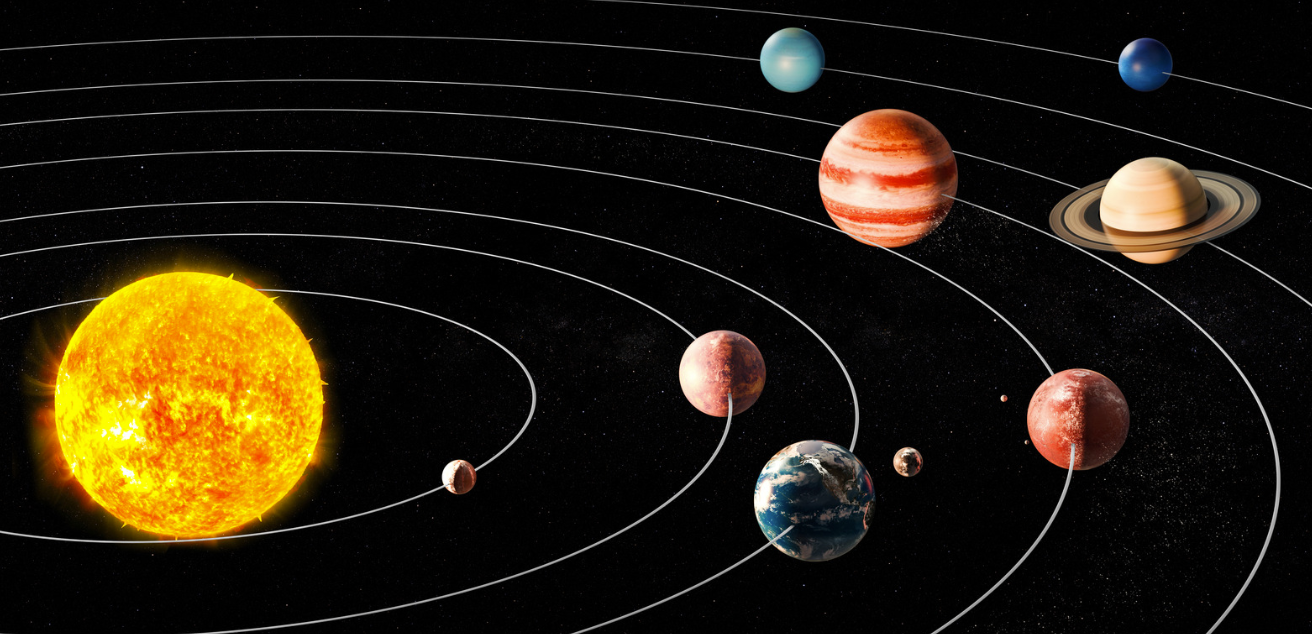
The cover is a conceptual solar-system illustration, not a to-scale diagram or a dated transit chart. This guide explains how to separate settings, comparison and reflection without promises of money, love, luck or inevitable difficulty.
Quick Guide
- Confirm the selected time, birth information and chart settings.
- Keep natal placements separate from positions for the selected transit time.
- Read the source’s aspect and timing definitions before comparing charts.
- Turn interpretations into optional questions, not decisions or diagnoses.
Settings, comparison, reflection
Settings
Record the time and calculator options. State uncertain birth information instead of inventing precision.
Comparison
Identify which positions and aspect labels are being compared. A calculated relationship is not an outcome.
Reflection
Write a question and check actual circumstances. An interpretation does not require an action or purchase.
Natal chart versus transit comparison
A natal chart is calculated for a birth moment; a transit comparison uses positions for another selected time. CHANI’s provider explanation of transits describes comparing the moving sky with natal placements and lists conjunctions, sextiles, squares, trines and oppositions. This is practitioner vocabulary, not independent proof of the provider’s claims about life themes or feelings.
Do not confuse a natal placement with the current position shown in a chart. Label each clearly. This guide to reading ephemeris dates, degrees and settings helps keep a position table separate from its interpretation.
Why calculator definitions matter
CHANI’s aspect documentation distinguishes its whole-sign approach for natal aspects from degree-based transit comparisons. That is a provider-specific method, not a rule that every calculator must follow. Ask which positions, aspect criteria and timing conventions your selected tool uses.
A start or end date on a report belongs to that report’s calculated or interpretive window. It is not proof that you will feel something throughout that period. Avoid fixed one-day or few-hour claims without checking the particular comparison and method.
Six questions for reading a report
These invented editorial questions are not a validated test or a predictive technique.
- Which time does this chart represent?
- What birth information is reliable and what remains uncertain?
- Which natal and transit positions are being compared?
- What aspect and timing definitions does the source use?
- Which statements are calculations and which are interpretations?
- What real-world evidence supports or contradicts my reading?
Handle uncertain birth information honestly
Do not supply an invented precise time to make a report look complete. Keep uncertainty visible and avoid treating a detailed-looking chart as proof of accuracy. This discussion of chart inputs and uncertainty separates what you know from what a symbolic reading suggests.
Use interpretations as questions
At a home desk, write one interpretation, one supporting example and one contradiction. For example, an editorial prompt could be “What plan needs reviewing?” That is an invented reflection question, not a traditional prediction or evidence that a planet caused the situation.
Do not assume a longer chart window has a stronger effect, a difficult label brings harm, or a favorable label ensures romance or wealth. An interpretation cannot diagnose emotional difficulties, remove habits or establish that communication will fail.
Keep practical decisions grounded
Do not choose medication, an investment, a contract or whether to stay in a relationship from a transit label. Use current information, actual circumstances, direct communication where safe and appropriate qualified advice. A report does not create an emergency or an obligation to buy another reading.
Key Takeaways
- Transit vocabulary describes an astrological comparison, not a guaranteed outcome.
- Birth information and calculator methods should be stated clearly.
- Calculated positions are different from causal claims.
- Reflection remains optional and cannot replace real-world evidence.
Frequently asked questions
What is an astrological transit?
It is an astrological comparison involving positions in the moving sky, often in relation to placements in a natal chart. Its interpretation is symbolic, not a guaranteed event.
How is a transit different from a natal aspect?
A natal aspect belongs to the chart calculated for a birth moment. A transit comparison uses positions for another selected time; check the calculator’s settings and definitions.
Does a longer transit have a stronger effect on my life?
A longer calculated window does not establish a stronger personal effect. A chart interpretation is not proof that planets caused feelings, opportunities or events.
Can I use transits to choose medical, money or relationship decisions?
Do not use a transit interpretation as the basis for a high-stakes decision. Use current evidence, actual circumstances, direct communication and appropriate qualified advice.