

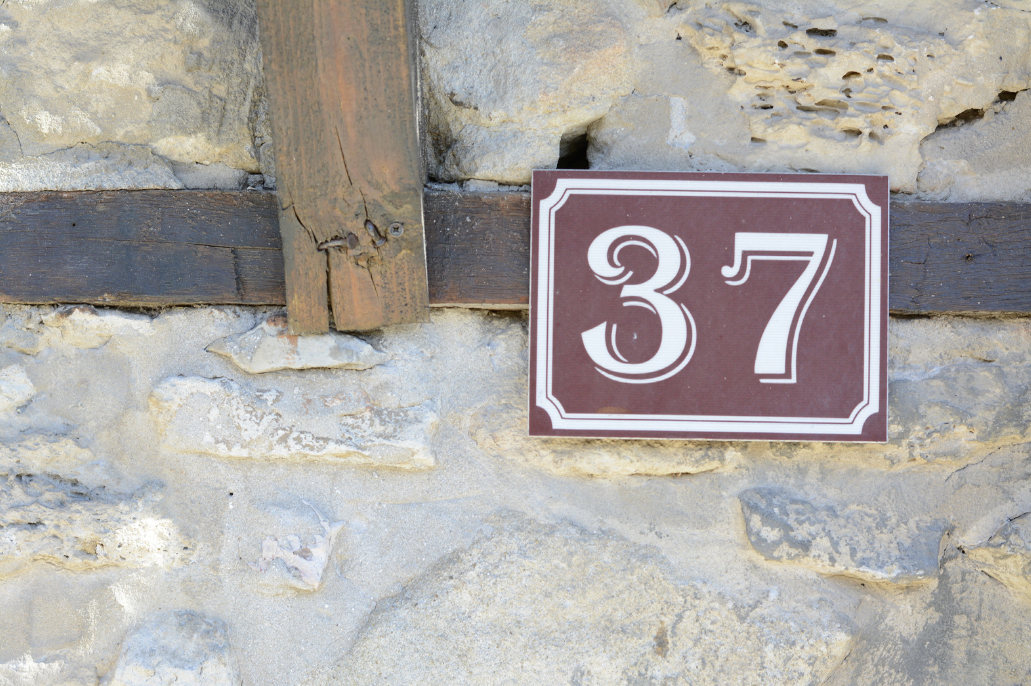
Numerology may supply an optional reflection label, but it cannot identify a destined or perfect home. This revised guide separates a digit calculation, a personal preference and an actual property question. It supplies no best-house matching table, healing promise or forecast of success.
The cover shows a number 37 plaque on a stone-and-timber wall. It is an illustration, not a recommendation for that property or evidence about its residents.
Quick Guide
- Use fictional inputs and state the calculation rule.
- Correct addition does not validate a home-energy claim.
- No life-path number obligates you to choose a matching address.
- Actual circumstances and property information come first.
Calculation, preference and property question
Calculation
Which digits and reduction rule are being used?
Personal preference
What do you actually want, without a number-based duty?
Property question
What information needs checking independently?
Corrected fictional arithmetic
For the date February 25, 1964, treated here only as fictional example data, the old total of 20 was incorrect:
- 2+2+5+1+9+6+4=29.
- Under this example’s repeated single-digit reduction, 2+9=11.
- Continuing the same rule, 1+1=2.
For a fictional building number 1224, 1+2+2+4=9. These correct sums do not establish compatibility between a person and a building. This example continues reduction to one digit; it does not impose that rule on frameworks that retain particular intermediate numbers.
The address calculation and convention guide provides a related example and explains why units, letters and fractions need stated rules. Do not change an official address or legal record to fit this exercise.
Replace a matching table with actual questions
This page no longer assigns ideal life-path groups to house numbers one through nine. A one does not guarantee strong energy, a two or six does not ensure peace or romance, a five does not predict short residence, a seven does not develop psychic gifts, an eight does not make a household successful and a nine is not a healing property.
The following newly invented editorial questions are optional, not traditional number meanings or a professional property assessment:
- Which actual daily need would I like a home to support?
- What cost am I assuming rather than checking?
- What practical question remains unanswered?
- Which preference is mine, and which comes from someone else’s expectation?
- Would I still consider this option without knowing its symbolic number?
- What information could change my first impression?
Practical spending remains separate
The US Consumer Financial Protection Bureau’s assess-your-spending guide recommends looking at actual spending and preparing an as-is budget before home shopping. It includes less frequent expenses and compares the total with take-home pay. This is a US home-buying resource, not a numerology endorsement or a rule for every country’s process.
The records, circumstances and money-question guide also keeps symbolic labels separate from finances. Neither exercise establishes affordability or recommends a loan, purchase or lease. Use relevant documents and appropriately qualified local assistance for consequential choices.
A home-desk comparison without an energy remedy
If useful, make private notes at an ordinary home desk with three headings: preference, information available and unresolved question. As a fictional example, someone likes a room’s appearance but does not know its recurring costs. An attractive impression or a number cannot answer that missing question.
Feelings about a place may be worth noting without treating them as proof of invisible energy. No paid adjustment, lucky object or psychic consultation is required. Do not publish a real home address, birth date, account details or identification documents to obtain a symbolic result.
You may skip the arithmetic altogether. Not finding a perfect-feeling home is not a personal failure or evidence that your number is wrong.
Frequently asked questions
Can numerology identify the right home for me?
A symbolic digit sum does not establish a home’s suitability, affordability, safety or future. Use actual property information and relevant qualified assistance.
What is the corrected sum for the fictional February 25, 1964 date?
The digits add to 29, not 20: 2+2+5+1+9+6+4=29. Under this example’s repeated single-digit reduction, 2+9=11 and 1+1=2.
Must my life-path and house numbers match?
No. This page supplies no validated matching rule or best-home table; matching or different symbolic numbers do not determine a property choice.
Do I need to pay to change a home’s energy?
No paid energy adjustment, address alteration or disclosure of private birth and location data is required for this optional exercise.