


Your zodiac sign does not reveal what is medically best for your body. Astrology offers historical symbolism and personal reflection, not a validated method of diagnosing illness or predicting individual health risks.
There is no sound basis here for concluding that Libra means skin disease, Pisces means depression or substance misuse, Capricorn means gallstones, or Sagittarius and Aquarius mean stronger immunity. Those claims should not guide your expectations or your care. Symptoms deserve attention on their own terms, whatever your sign.
Quick Guide
- Separate history from medicine: symbolic body correspondences are not clinical findings.
- Use relevant information: describe symptoms, current medicines and your personal health history to a qualified professional.
- Do not time care by astrology: a transit or sign is not a reason to postpone assessment or change treatment.
- Keep reflection low-stakes: notice routines without assigning illness, blame or risk to a zodiac category.
Where the body-and-zodiac idea comes from
The National Library of Medicine’s historical Zodiac Man exhibit describes a 1493 woodcut in Johannes de Ketham’s medical text. It explains the belief that regions of the body corresponded to the planets and stars, and that this belief was used in treatment decisions. Its discussion of Aries and the head documents a historical practice; it does not endorse that practice.
A museum or library preserving an old medical chart is not validating its instructions. Historical sources help us understand how people explained life and health, including explanations that should not be used to decide present-day treatment.
What “rules the body” should not mean
Astrologers may use “rulership” to describe a symbolic correspondence. That word does not establish physical control over an organ. Listing a sign beside the thyroid, kidneys, heart or nervous system tells you about an interpretive system, not how well a particular person’s organs function.
It also cannot establish that someone is careless, emotionally unstable, prone to addiction or unwilling to seek help. A health concern is not a character flaw or a failure to align with a planet. Do not tell a person that illness follows from being insufficiently disciplined, spiritual or calm.
For another example of keeping appearance-related symbolism separate from biology, see our zodiac-and-gaze guide. Neither a sign nor a photograph can diagnose a condition.
Three boundaries for a responsible reading
No risk prediction
Do not infer disease, stronger immunity, injury likelihood or mental-health problems from a sign or chart placement.
No treatment rule
Do not use astrology to choose medicines, supplement doses, diets, procedures or the timing of care.
No blame
Illness is not proof of bad energy, hidden anger or an unsuccessful spiritual lesson. Respect the person’s experience and appropriate care.
Preparing for a real healthcare conversation
MedlinePlus’s Talking With Your Doctor guide recommends preparing questions and concerns and writing down a description of symptoms. This is a more useful starting point than interpreting a horoscope.
- Write what you are experiencing in your own words and when it began.
- Note changes and relevant circumstances without assuming a cause.
- List the questions you want to ask and the medicines or supplements you take.
- Ask the professional to explain the assessment, options and next steps in language you understand.
This is general appointment preparation, not an assessment of symptoms or an instruction to wait for a routine visit. If something seems urgent, seek appropriate medical help promptly. In a life-threatening emergency, contact local emergency services. Do not let a reassuring horoscope override a concern about your health.

Keep a historical claim separate from a health note
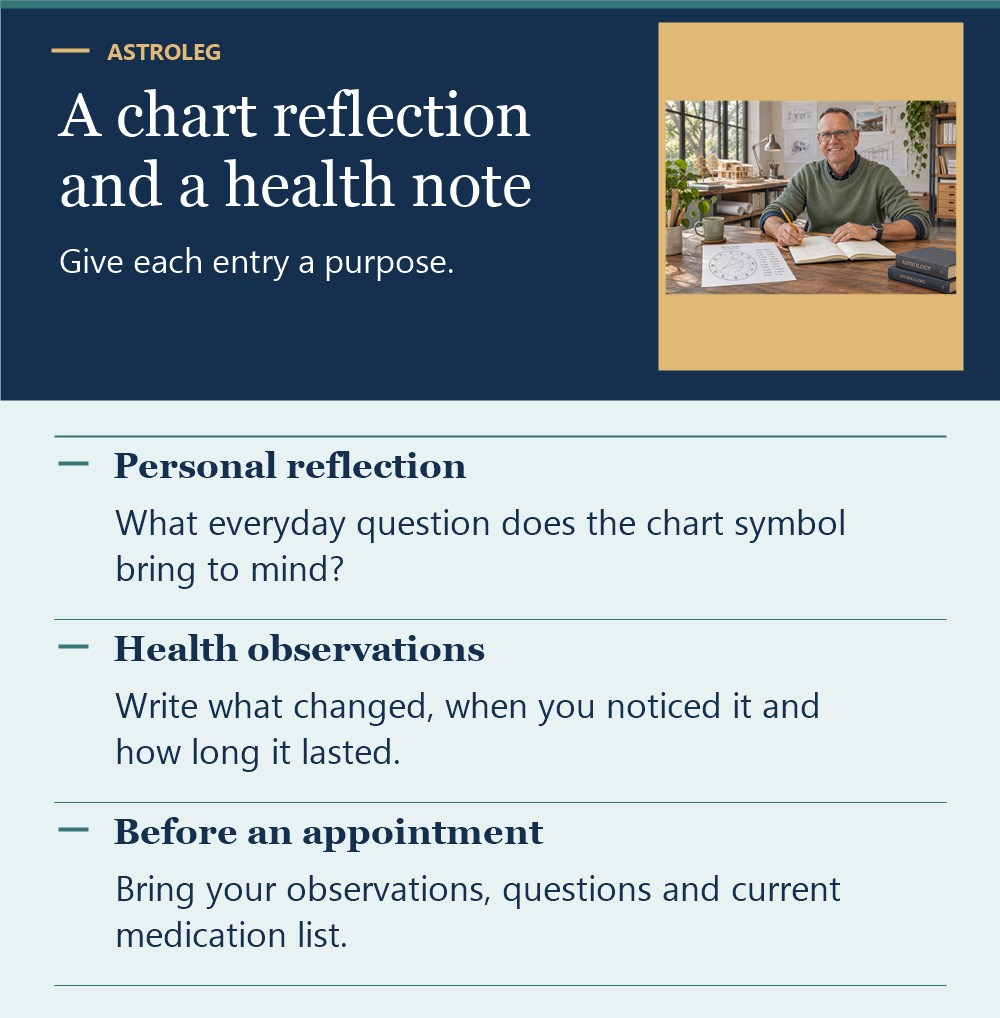
One chart, two different purposes
Imagine reading a historical chart that places a zodiac symbol beside a body part. A useful history note records the chart’s creator, date and belief. It does not put that body part on your personal list of diagnosed conditions or tell you to move an appointment.
- History note: “This chart records a belief about the relationship between the sky and the body.” Keep the source and its historical setting with the note.
- Health note: Describe an actual concern in your own words, including when you noticed it. If the cause is unknown, leave it unknown rather than supplying a sign-based explanation.
- Care question: Ask the healthcare professional what information is relevant, what the next step is and how to get clarification afterward.
You can tell a clinician that a belief or an article has raised a concern. You do not need to prove the belief first. Keep assessment and care decisions with an appropriately qualified professional; this example does not assess a symptom or establish how long someone can wait.
A short note for a healthcare conversation
Keep this note private and use your provider’s appropriate communication channel.
- Concern: What have I noticed?
- Timing: When did it start? Mark uncertain dates as approximate or unknown.
- Relevant information: List allergies, medicines, herbs, vitamins and supplements from current records.
- Questions: What do I need explained?
- Understanding: What written instructions or follow-up contact do I need?
Do not delay appropriate care to complete every line. Ask the provider’s office about communication assistance if needed.
Use a chart to find words for an emotion
If you read your Moon sign as a symbol for what helps you feel at home, try asking what actually helped you feel at ease this week. A reader might associate a Capricorn Moon with structure and realize that an unhurried meal mattered more than a perfectly organized day. Follow what you notice in your life.
You can bring a spiritual framework into a conversation about wellbeing if you find it meaningful. For practical support with persistent distress, use the National Institute of Mental Health’s guide to caring for your mental health.
Reflection without medical claims
If you enjoy astrology, choose a nonmedical question: What makes a routine easier to maintain? What kind of quiet time do I enjoy? What do I want to ask at my next appointment? Every person can consider these questions; they are not prescriptions for particular signs.
Sit at a home desk or outside in the yard with a notebook. Record a practical preference, a barrier and one question to clarify. You do not need specialized equipment, a paid spiritual diagnosis or a professional office. Avoid turning this exercise into a rigid rule about sleep, food, movement or treatment.
Our Venus-sign personal-style guide illustrates a lower-stakes creative use of symbolism: exploring taste while keeping comfort and actual preferences first. Medical decisions require a different standard of evidence.
When someone offers “healing” based on a chart
Ask what the person means by healing and what qualifications they have for the service offered. Spiritual reassurance is not clinical training. Be cautious about guaranteed cures, fear-based demands to buy cleansing or advice to stop prescribed care. Discuss treatment and supplement questions with an appropriate healthcare professional or pharmacist, not an astrological category.
You can value personal beliefs while declining medical claims made in their name. A respectful reader should allow disagreement and should not pressure you to substitute a reading for care.
Key Takeaways
- Medical astrology is a historical belief system, not an individual health test.
- No sign establishes disease, immunity, anatomy, addiction or mental health.
- Use symptoms, history and qualified assessment for health decisions.
- Keep zodiac reflection voluntary, non-diagnostic and separate from treatment.
Frequently asked questions
1. Can my zodiac sign reveal my health risks?
A zodiac sign is not a validated clinical test and cannot establish your individual risk of disease, injury or mental-health problems. Discuss relevant symptoms, history and screening with a qualified healthcare professional.
2. Why do astrology books connect signs with body parts?
These connections belong to historical and symbolic medical-astrology traditions. A historical chart documents a belief; it does not validate that belief as anatomy or modern treatment guidance.
3. Should I choose a diet, supplement or treatment by my sign?
No. Your individual needs, conditions, medicines and professional advice matter. Do not start, stop or change treatment, choose doses or delay care because of an astrological interpretation.
4. Can I still use astrology for personal reflection?
Yes, if you keep it optional and low-stakes. Use a theme to ask about your routines or preferences without diagnosing symptoms, blaming illness on personality or replacing medical care.